Almost every stick I see is the wrong height
A stick that is too tall pushes the shoulder up and the elbow out, which tires the arm and does very little for balance. Too short, and the user leans forward, the posture that precedes most falls.
The correction takes two minutes and costs nothing, which is why it is worth doing before spending anything at all.
The measurement
Stand upright in the shoes you normally wear, arms hanging loosely at your sides. Have someone measure from the floor to the crease of your wrist. That distance is your stick height.
Set against that, the elbow should sit at about a fifteen to twenty degree bend when holding the stick. If the arm is straight, the stick is too long.
Grip matters more than material
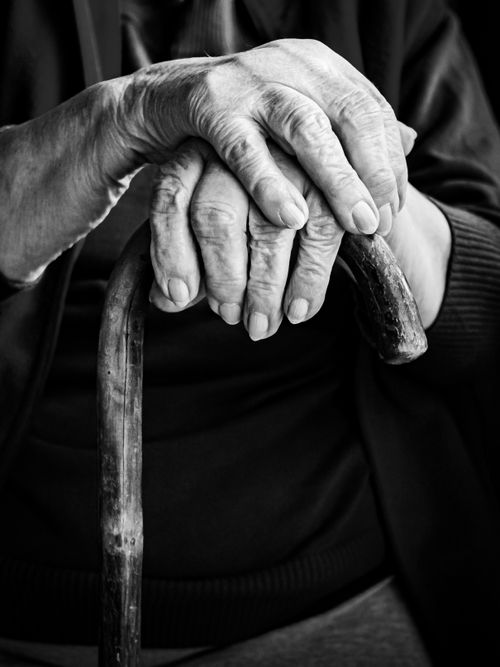
For anyone with arthritic hands, a moulded or palm-shaped grip spreads the load across the whole hand rather than concentrating it in the fingers. A narrow crook handle looks traditional and is genuinely painful to use for long.
Try to hold one before buying, or order from somewhere that will exchange it without argument.
The tip is the part that fails
Rubber ferrules wear down, and a worn tip on a wet floor is worse than no stick at all. Check it every few months and replace it when the tread flattens. They cost very little.
If most walking happens outdoors on uneven ground, consider a wider or multi-point tip for the additional contact area.
Folding versus fixed
A folding stick that fits in a bag is a stick that gets carried. A fixed stick left by the door is a stick that stays there.
Fixed sticks are marginally more rigid, but for most people the difference is theoretical and the convenience is not.
This guide is general information about product selection and everyday care. It is not medical advice and does not replace consultation with a qualified clinician. Speak to a doctor before starting, stopping or changing any treatment.